Goodyear Artificial Turf Pros
Desert-Adapted Turf Installs in Goodyear, AZ
Desert-adapted turf installs in Goodyear, AZ with heat-resistant fiber and cooling infill built for 110-degree summers. Free estimates.
- 15+ Years local experience
- 500+ Projects completed
- Licensed & Insured
Serving Goodyear and nearby communities.
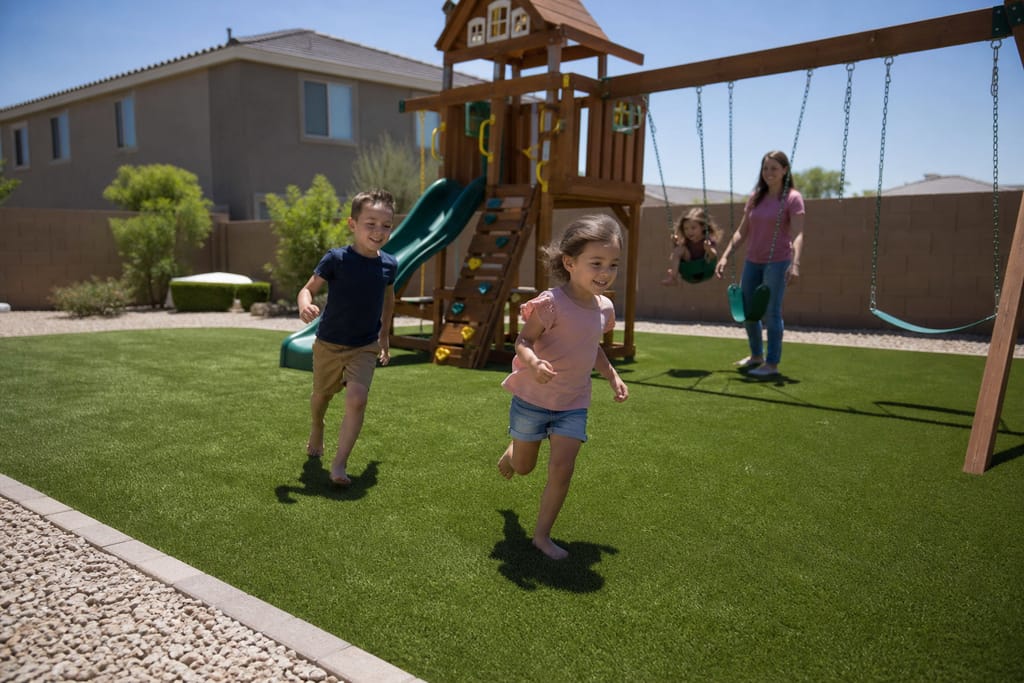
Not every turf product survives a full Goodyear summer. Standard big-box rolls can soften, fade, or get hot enough to burn bare feet by midsummer. Goodyear Artificial Turf Pros builds desert-adapted installs around fiber and infill choices made specifically for extended stretches of triple-digit heat, not a generic catalog pick.
The base layer matters as much as the turf itself. We choose aggregate and infill combinations that shed heat instead of holding it, so the surface stays usable through the hottest part of the day.
What's included
What's Included with Desert-Adapted Turf Installs
Typically included: heat-resistant turf fiber selection, reflective or cooling infill, base prep designed to limit heat retention, expansion-ready seaming.
Optional: surface temperature testing after install to confirm performance under direct sun.
Customer prep: let us know which parts of the yard get the most direct afternoon sun so fiber and infill choices can be matched to those hot spots.
Want a clearer scope?
Get a Free EstimateHow it works
How Our Desert-Adapted Turf Installs Process Works
 Step 1
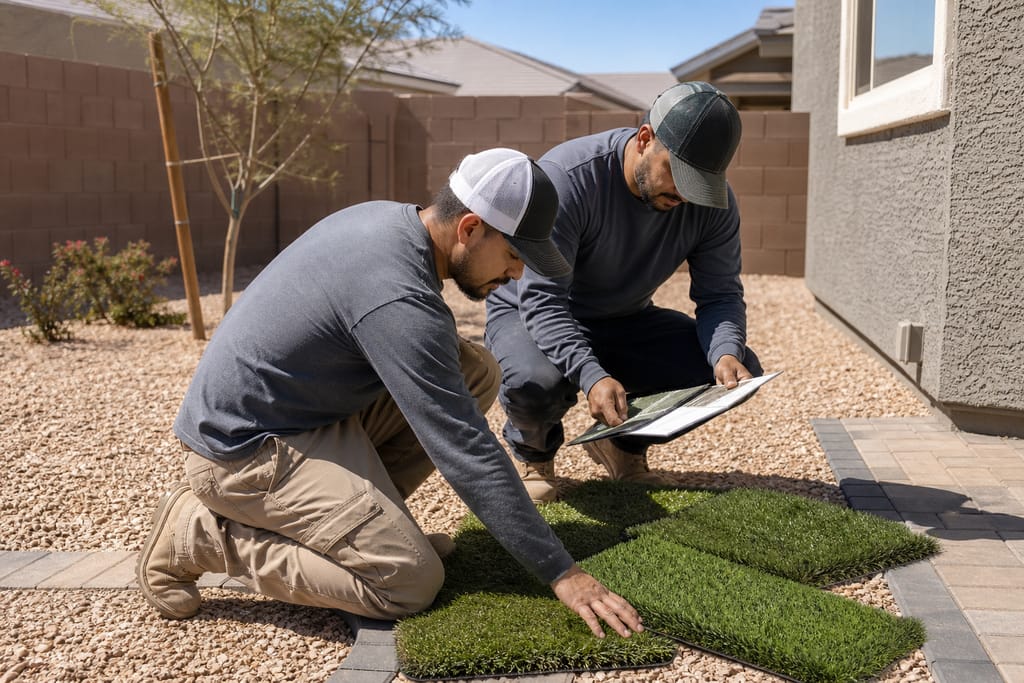
Heat tolerance planning
Turf products get selected based on resistance to intense, prolonged sun exposure.
 Step 2
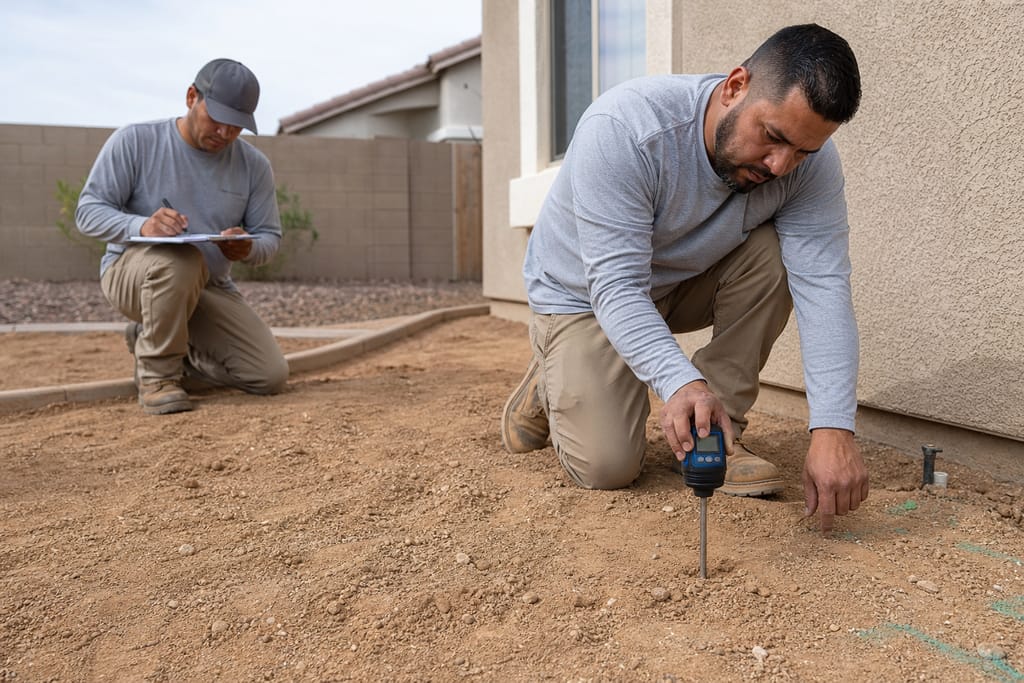
Soil moisture testing
Existing soil conditions are checked to plan the right drainage approach.
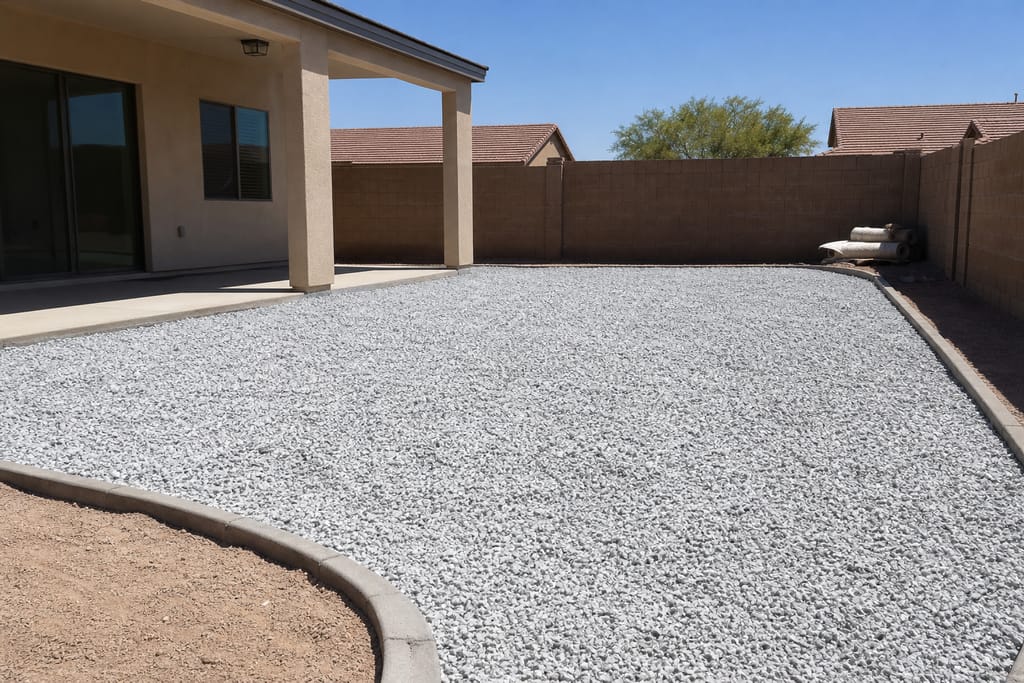 Step 3
Reflective base prep
Base materials are chosen to limit how much heat builds up beneath the surface.
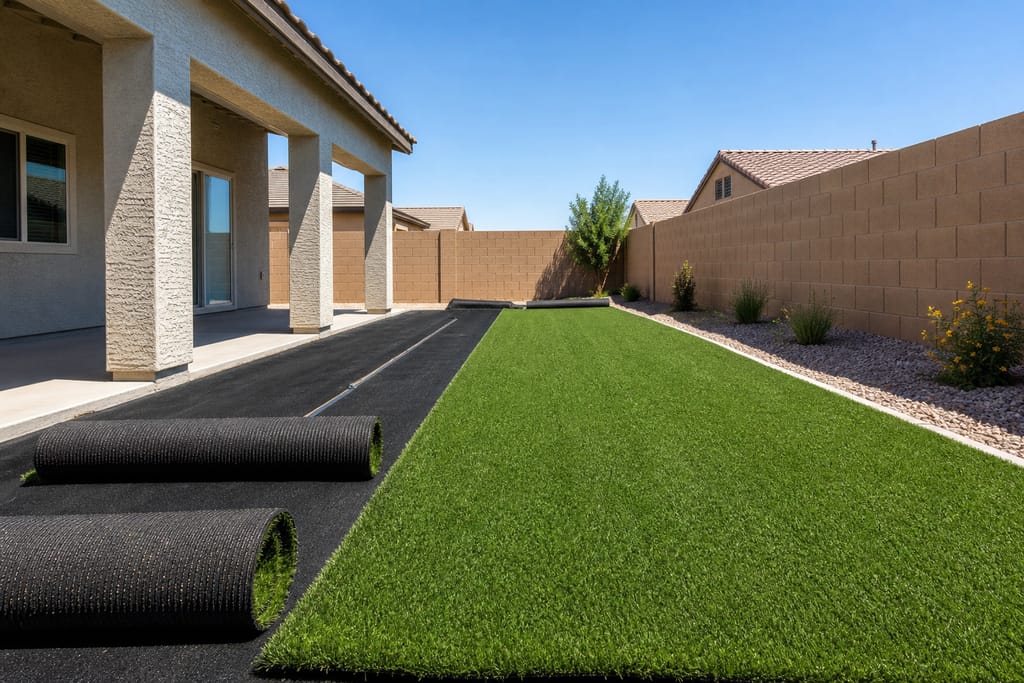 Step 4
Heat-resistant turf laying
Specialized fiber rated for extreme temperatures is installed across the yard.
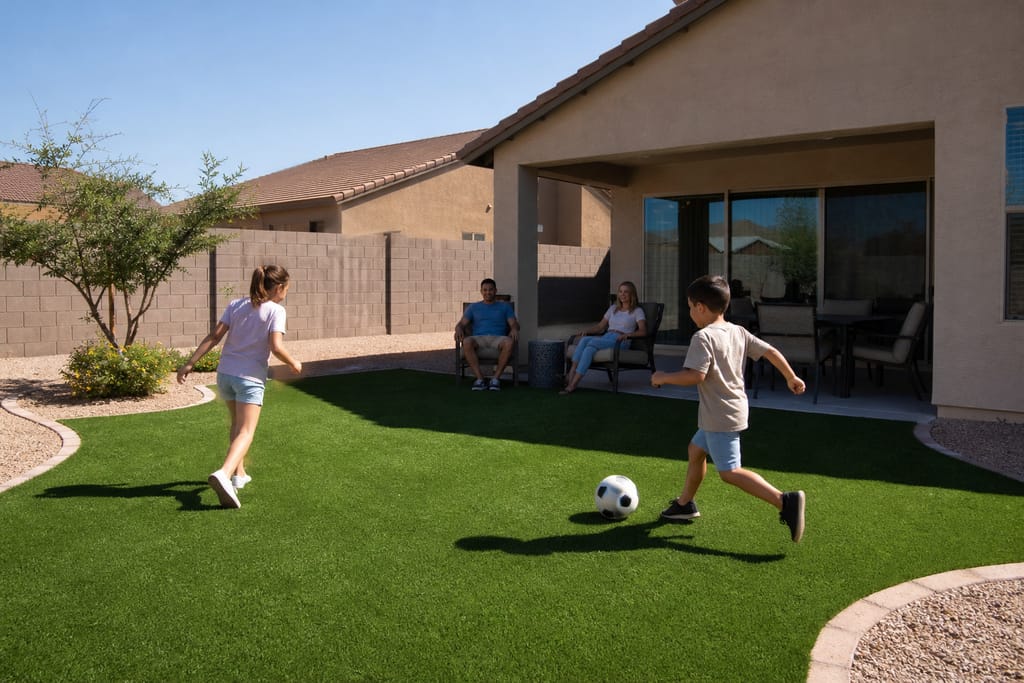 Step 5
Expansion gap allowance
Small gaps built into seams account for material expansion during peak heat.
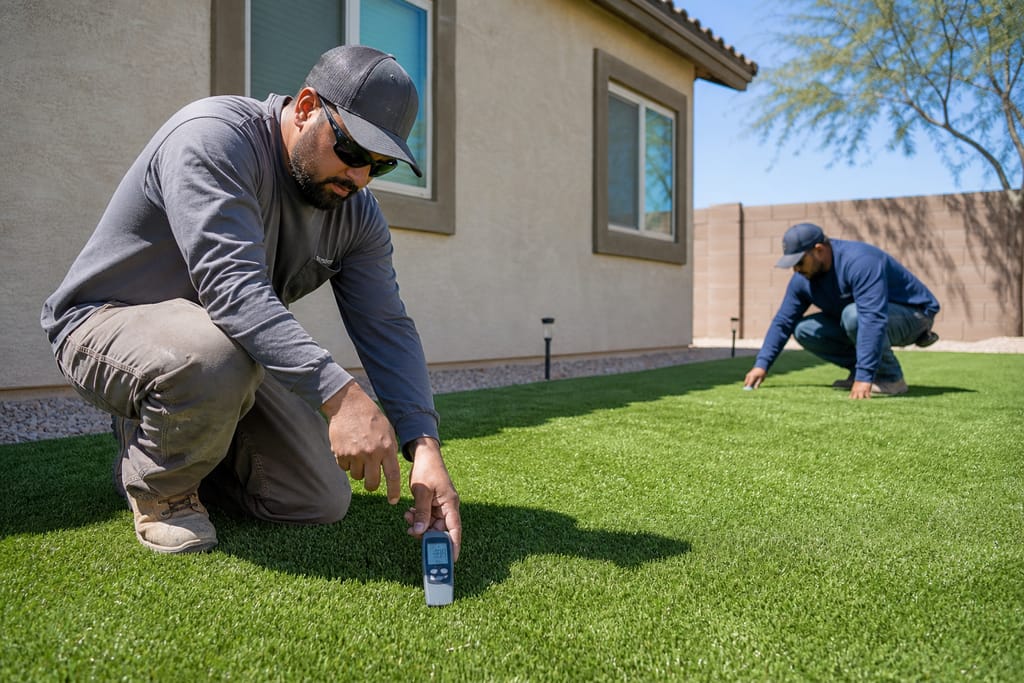 Step 6
Surface cooling check
We test surface temperature in direct sun before considering the job finished.
Materials
Materials and Methods for Desert-Adapted Turf Installs
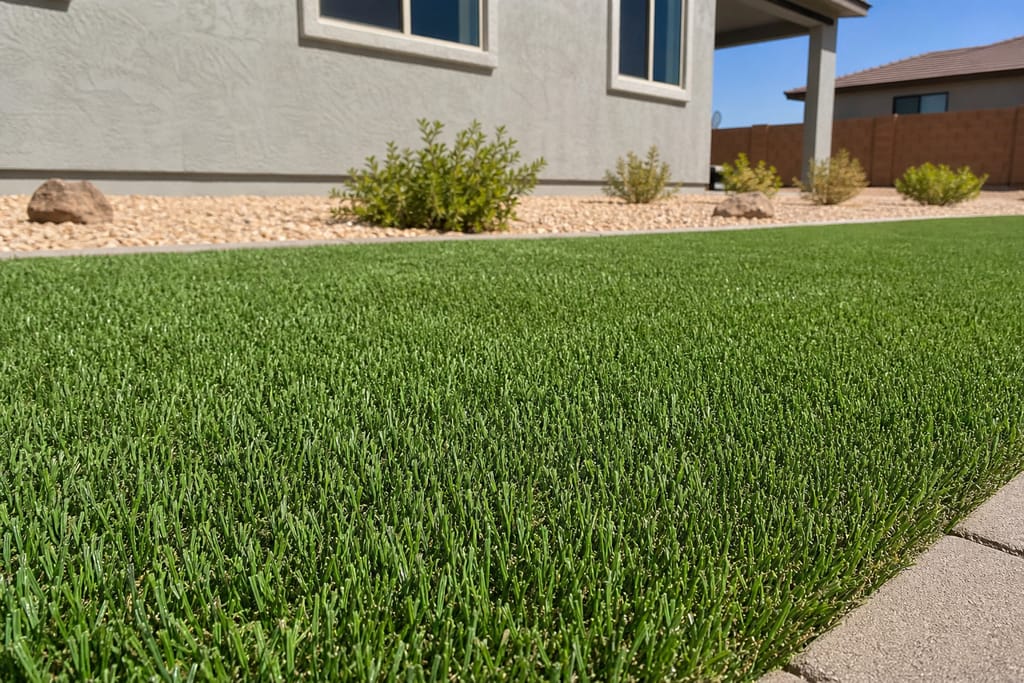
Heat-resistant turf fibers
Fiber engineered to resist softening and fading through repeated 110°F-plus days.
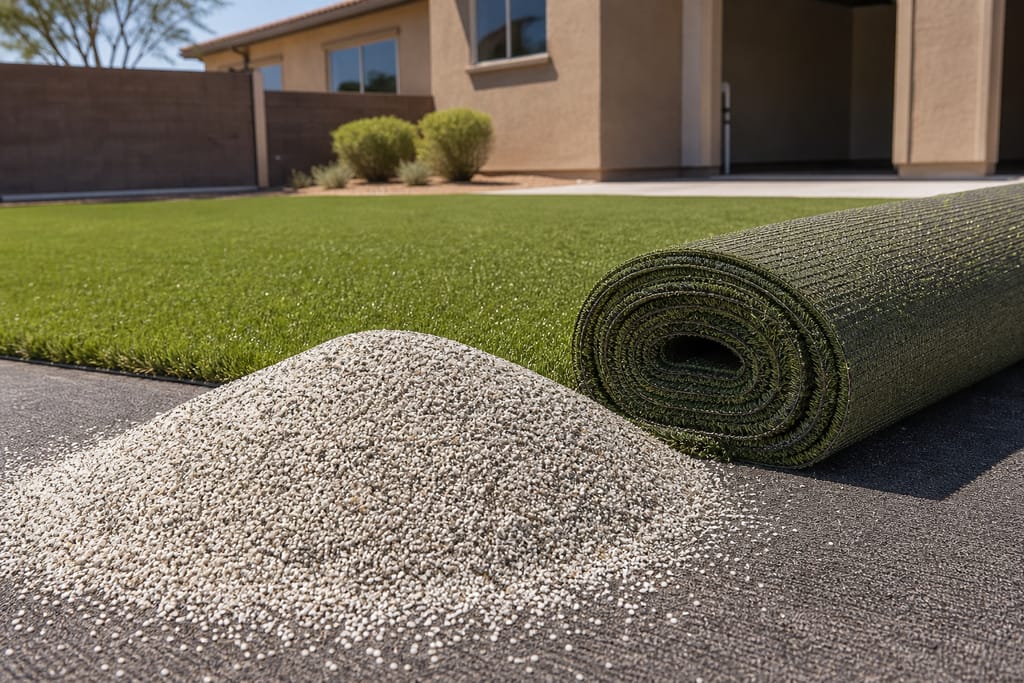
Reflective infill blend
Infill designed to bounce heat rather than absorb it, cutting surface temperature noticeably.
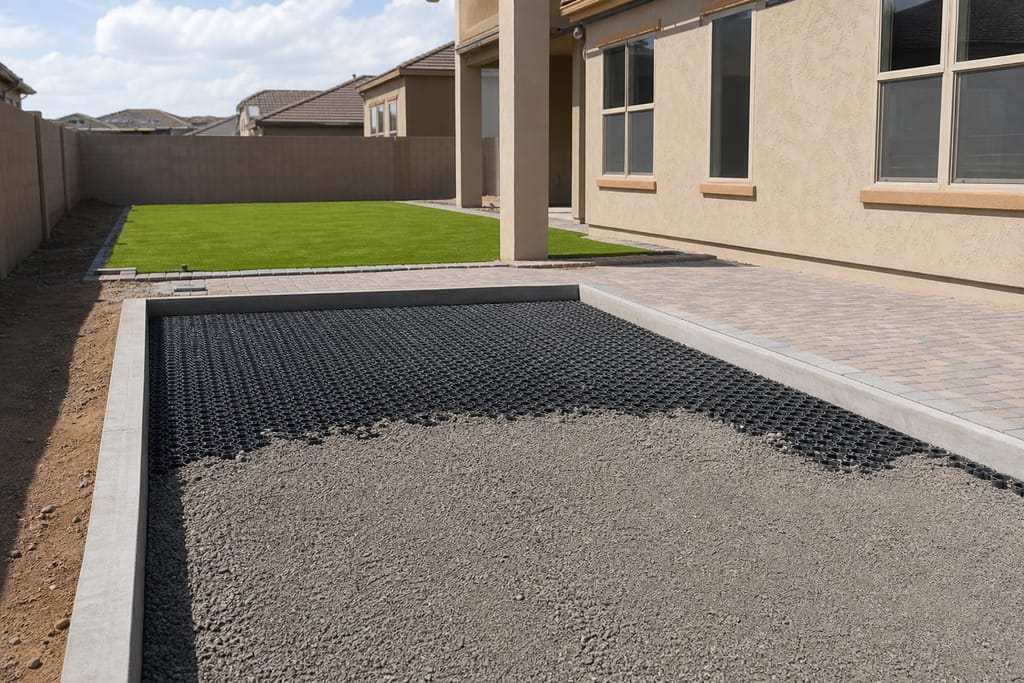
Drought-tolerant base layer
Base material chosen for stability in Goodyear's dry, low-moisture soil conditions.
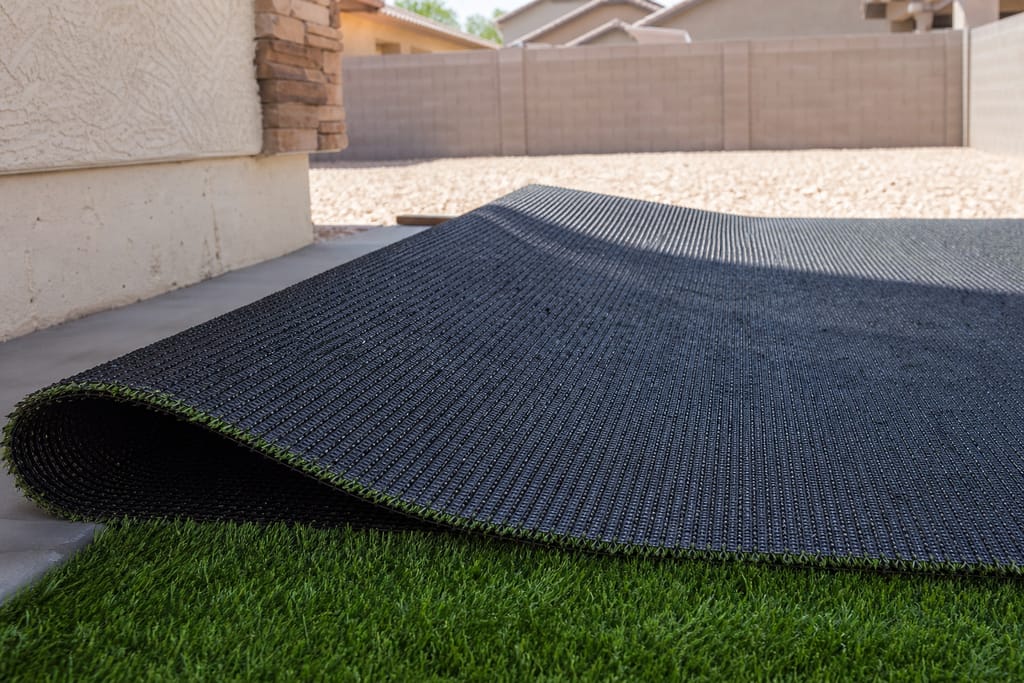
UV-protected backing
Backing treated with stabilizers to prevent cracking after years of direct sun.
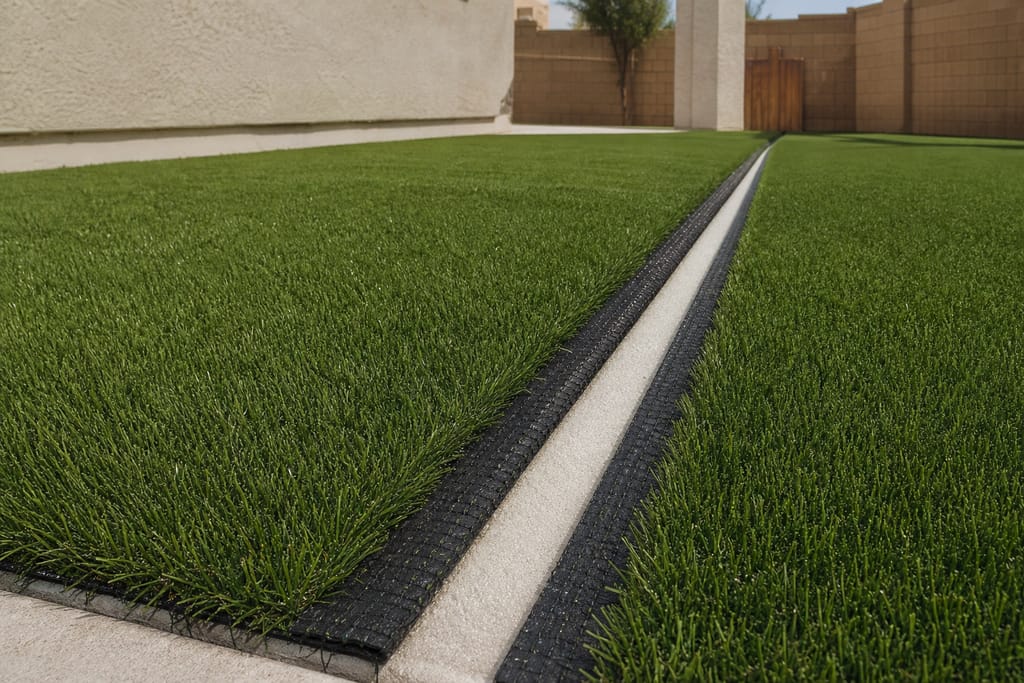
Thermal break seams
Seaming built to flex with heat expansion instead of pulling apart.
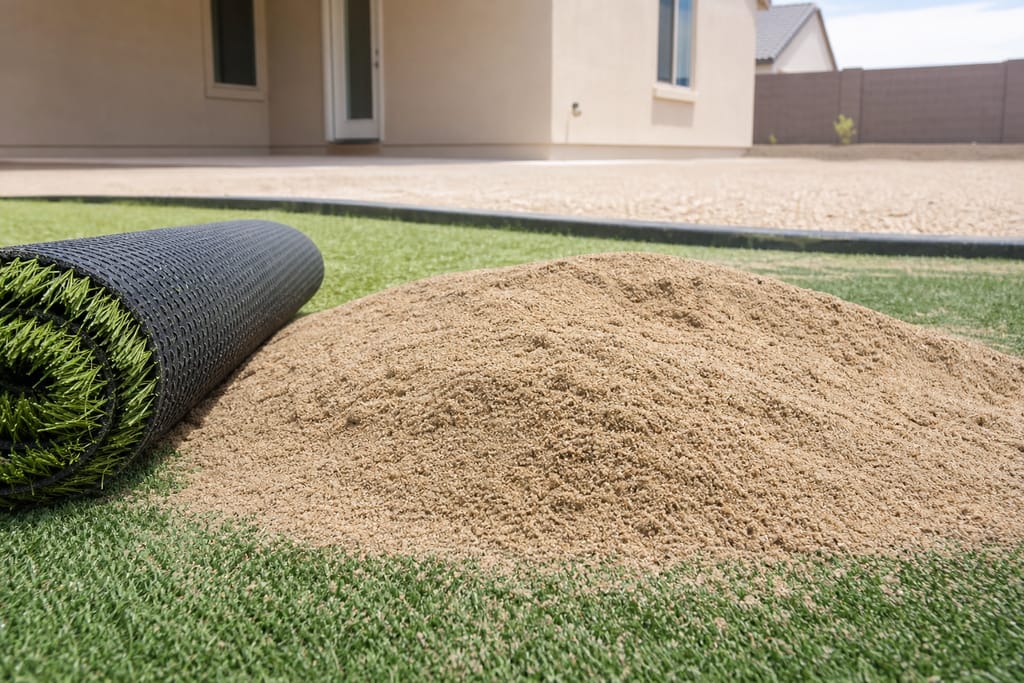
Sand-based filler
Sand filler adds stability while still letting heat dissipate through the surface.
Questions on materials?
Get a Free EstimateTimeline
How Long Does a Desert-Adapted Turf Installs Take?
Timing runs close to a standard install with extra attention paid to infill application.
- 01
Consult and fiber selection
same day - 02
Base prep
1 day - 03
Turf laying and seaming
1–2 days - 04
Cooling infill and finishing
same day
Need a schedule that fits?
Get a Free EstimateFAQs
Desert-Adapted Turf Installs FAQs
Does artificial turf get too hot to walk on barefoot in Arizona summers?
Standard turf can get uncomfortably hot, which is exactly why heat-resistant fiber and cooling infill matter. A desert-adapted install cuts surface temperature noticeably compared to a generic product.
What is the downside to artificial turf in extreme heat?
Lower-grade turf can soften or fade faster under sustained heat, and surface temperature can get high without the right infill. Choosing heat-rated materials up front solves most of this.
What infill is best for Arizona heat, zeolite or silica sand?
Zeolite and other cooling-style infills generally outperform plain silica sand for surface temperature, though the right choice depends on your yard's sun exposure and budget.
Is desert-adapted turf more expensive than standard turf?
Typically a bit more upfront due to the specialty fiber and infill, but it holds up longer and stays more usable through summer.
Will desert-adapted turf still fade eventually?
All turf fades gradually over years of sun exposure, but UV-stabilized, heat-rated fiber slows that process significantly compared to standard products.
Next step
Get a Desert-Adapted Turf Installs Estimate in Goodyear
Call Goodyear Artificial Turf Pros at (928) 563-5672 for a free estimate on a turf system built for Arizona heat.
Before & after
Before and After Desert-Adapted Turf Installs in Goodyear
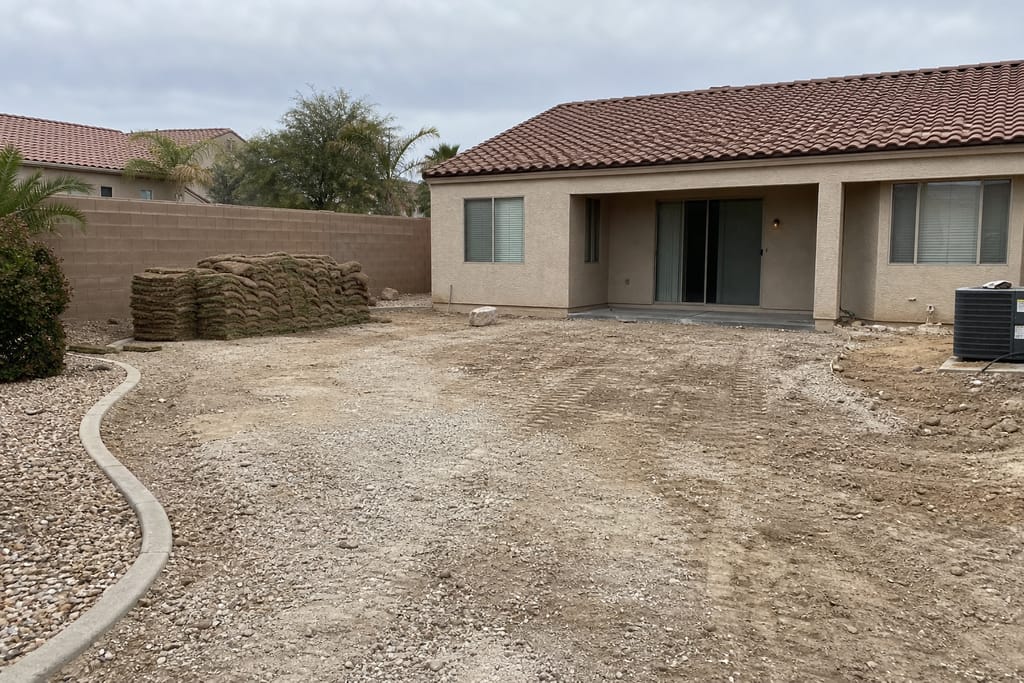
Before 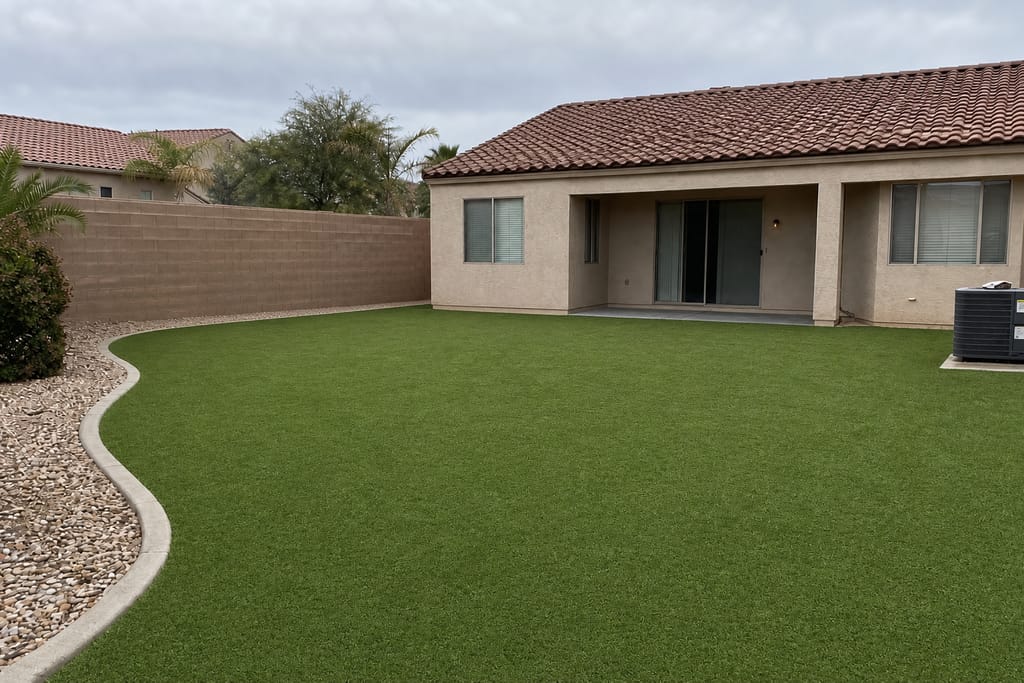
After
More services
Other Artificial Turf services
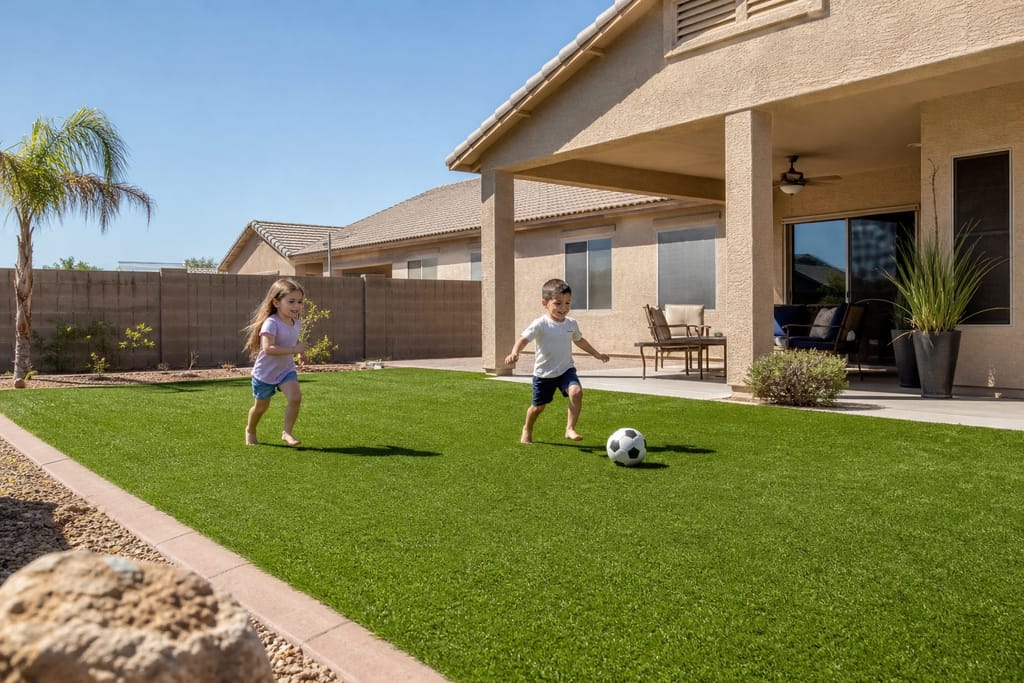
Artificial Turf Installation
Artificial turf installation in Goodyear with heat-rated fiber, compacted base, and free estimates on every job.
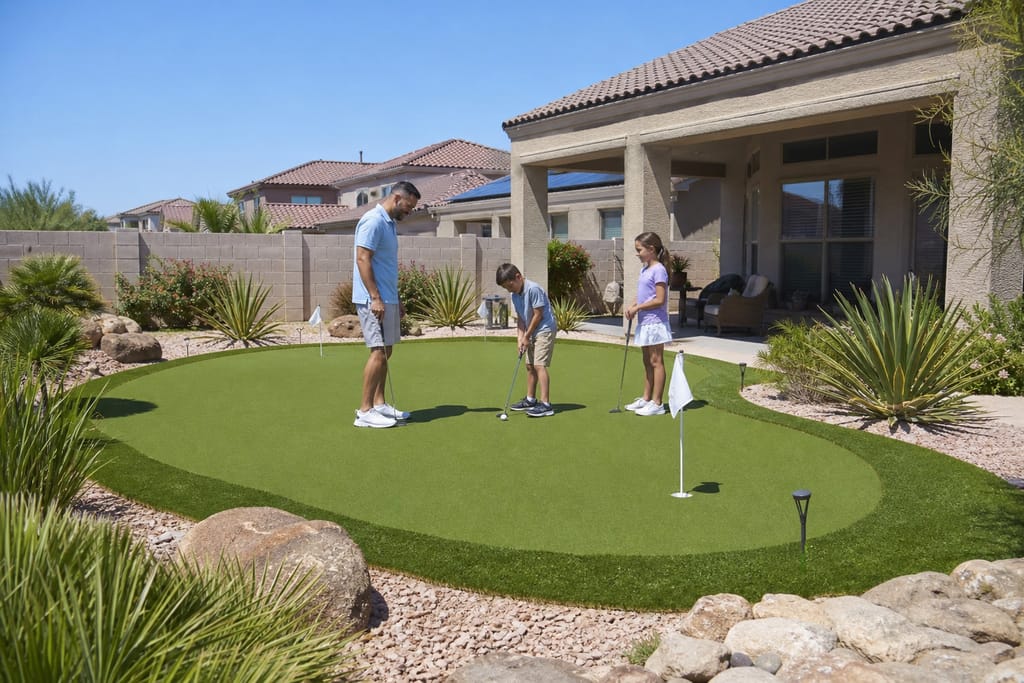
Putting Green Installation
Backyard putting green installation with custom contouring, regulation cups, and heat-stable turf built for Arizona summers. Free estimates.
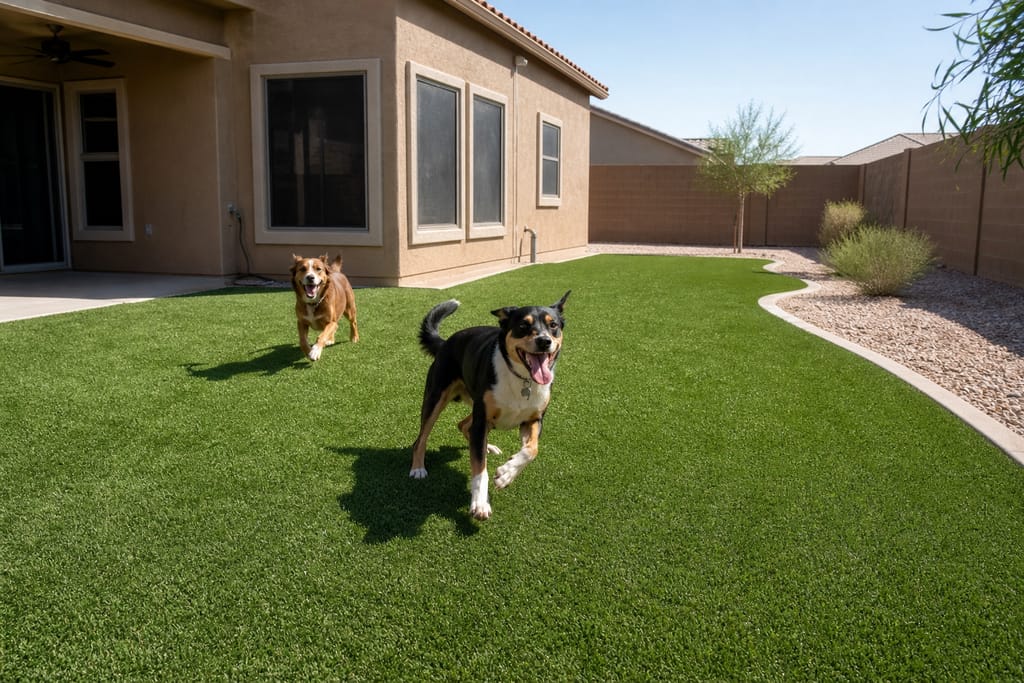
Pet Turf Installation
Pet turf installation in Goodyear, AZ with drainage backing and odor-control infill built for desert heat. Free estimates.
Ask about Desert-Adapted Turf Installs
Tell us about the project and how to reach you.